


PR, Drones, and Half a Million Dollars: The Story of a Candidate for a Strategic Post
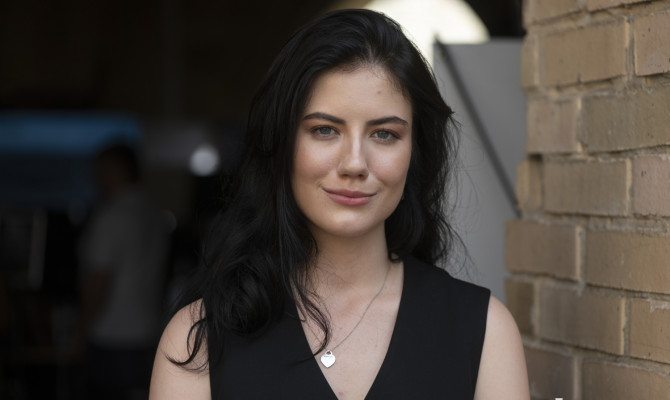
Kateryna Mykhalko, a 24-year-old executive director of the NGO "Technological Force of Ukraine" (TFU), has recently become one of the most talked-about figures in the Ukrainian defense export sector. A public campaign featuring appearances at international forums and photo ops with world leaders triggered a wave of scrutiny from media and civil society.
The Trigger: Aggressive PR with No Track Record
Until spring 2025, Kateryna Mykhalko was virtually unknown. Despite TFU being registered over two years ago, there was no record of significant activity. Yet suddenly, Mykhalko began appearing at key defense events, speaking publicly on arms exports, and was even named a candidate for a leadership role in a prospective government agency that would oversee these exports.
The Investigation: A Troubling Past Emerges
The sudden and well-funded PR push prompted journalists, bloggers, and citizens to dig into Mykhalko’s background. They discovered that her NGO had shown little to no real activity before 2025. More notably, Mykhalko was previously a co-founder of Nuka, a Ukrainian startup that in 2019–2020 raised over $500,000 on Kickstarter, promising to deliver an “eternal notebook and pencil.” At the time, it was one of the most hyped Ukrainian crowdfunding campaigns.
But most backers never received the products. Some of the items delivered were defective, mass production never scaled, and no financial accountability was provided. Despite a public outcry, no legal consequences followed. Mykhalko quietly exited the project before obligations were fulfilled and never publicly addressed the situation.
The Response: Deflect, Don’t Explain
Facing criticism, Mykhalko responded by framing the backlash as ageist and sexist, stating that people attack her because she is a young woman who loves Ukraine. “This is a typical reaction when a young woman speaks up,” she wrote on Instagram. She also labeled critics as agents of foreign influence.
However, no public commentary focused on her age or gender. Instead, concerns were based on facts: her role in a fraud-like project, the inactivity of TFU until recently, and the opaque process by which she is being positioned for a key government role.
The Supporters: PR Firepower and Controversial Allies
Among Mykhalko’s defenders are anonymous Telegram channels linked to the Office of the President and a range of controversial figures. For example, Rudolf Akopyan, a PR operative with ties to an ethnic organized crime group, is currently involved in a scandal related to the distribution of public funds to drone manufacturers. Also voicing support is Sevgil Musaieva, editor-in-chief of Ukrainska Pravda and a longtime fixture in Ukraine’s oligarchic media landscape.
Most notably, Denys Bihus, head of the investigative project Bihus.Info, came to her defense—despite himself being at the center of a major scandal last week when it was revealed he has been an official informant for the Security Service of Ukraine (SBU) for over a year.
What unites these defenders is their shared narrative: criticism of Mykhalko is due to her gender and youth—not her past record or sudden elevation to a strategic role.
Packaging Without Substance: A Familiar Pattern of Proxy Figures
This is not a story about gender or age. It is a case of a person with no relevant experience and a record that includes participation in a failed (if not fraudulent) project being positioned for a highly sensitive and corruption-prone government role.
To legitimize this trajectory, the government is again relying on familiar media tactics: glossy interviews, staged photos with international leaders, participation in high-level forums, and aggressive image crafting.
The photo with French President Emmanuel Macron, for instance—taken from Mykhalko’s personal Facebook and clearly staged—helped draw attention to her identity and fueled public curiosity. It was this image, above all, that prompted people to Google her name.
Likewise, her Instagram response to criticism avoided addressing any of the documented concerns and instead leaned entirely on emotional appeals and claims of discrimination.
Still, there is a silver lining. Ukrainian civil society is becoming increasingly mature and critical. Where similar figures once ascended unchallenged through media-managed campaigns, today their pasts are thoroughly scrutinized and tested.
What remains troubling is that the government continues to introduce proxy candidates—figures with minimal credibility but maximum loyalty—wrapped in patriotic language. The difference is, fewer people are buying it. And the sooner we call these patterns by their real names, the fewer costly mistakes we’ll make in the future.
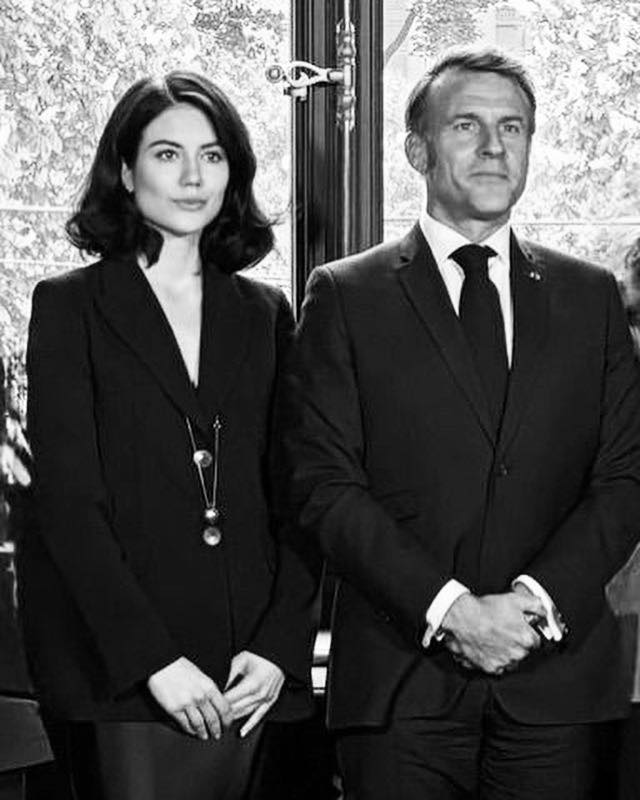
A staged photo from Kateryna Mykhalko’s Facebook, posing next to French President Emmanuel Macron. It was PR shots like this—featuring an unknown figure at the time—that sparked public attention. After the photos appeared online, users began to investigate who Mykhalko was, quickly uncovering a number of serious questions about her background.
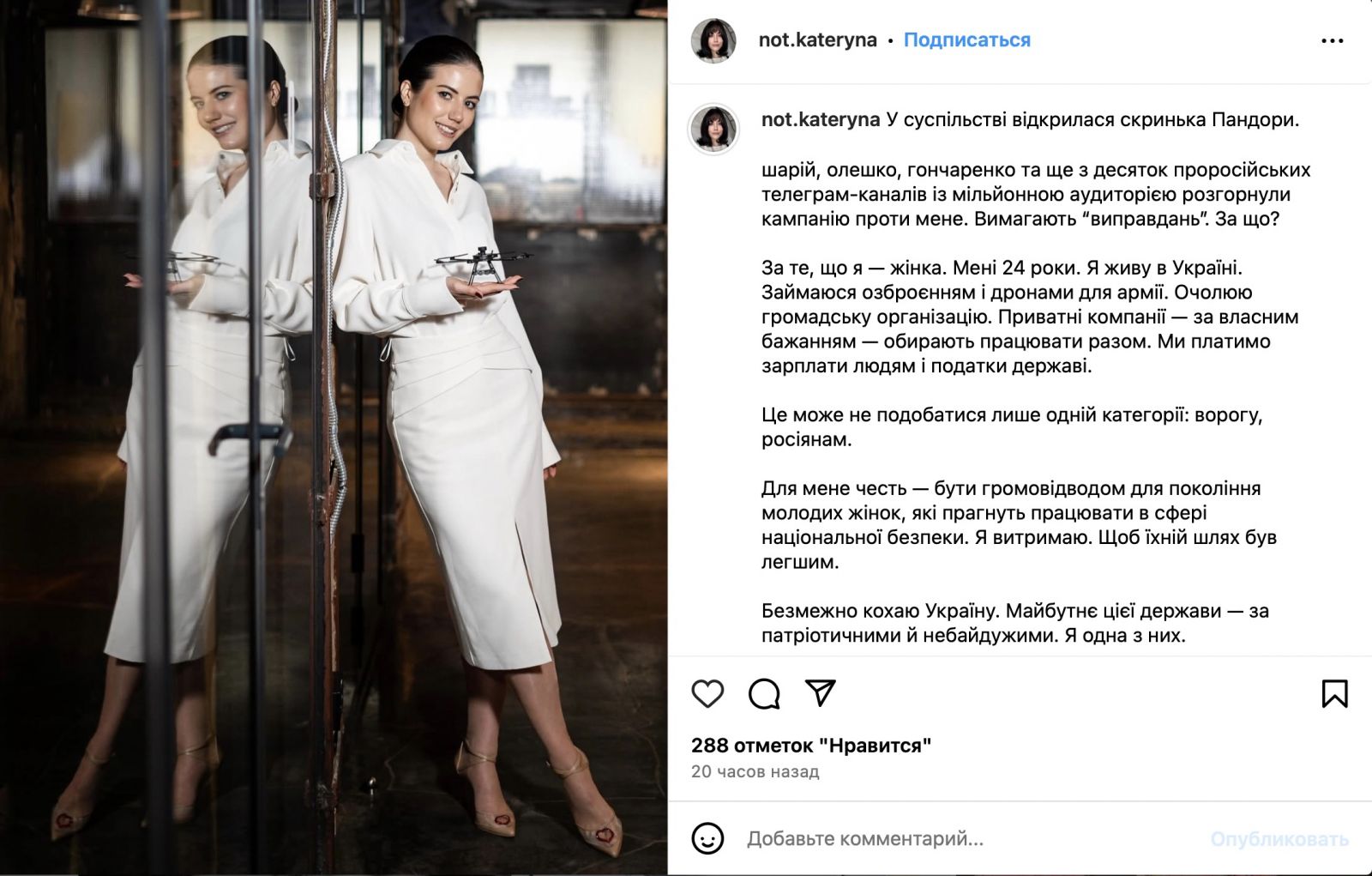
Screenshot from Kateryna Mykhalko’s Instagram. In response to the wave of criticism, she did not address a single substantive issue that had been raised. Instead, she tried to deflect the discussion with emotion, claiming she was being “attacked” solely because she is a young woman.

Design, style, and all the contents of website www.capital.uaare protected by copyright and law. Any use of site materials is allowed only while meeting the requirements of reprinting terms and with the reference to www.capital.ua.Only materials in public domain can be used and adding of link and/or direct hyperlink open for search engines to immediate material address on www.capital.ua. The link/hyperlink should be placed in the sub-title or in the first paragraph of the material. Font size of the link or hyperlink should not be less than the font size of the main text in the material. Any use of materials that are in closed access and are only available to registered users is allowed only with the prior written permission of the copyright owner. Reprinting, copying, reproducing, modifying or any other use of materials published with the note  of the agreement of syndication with Financial Times Limited are strictly prohibited. Use of materials which refers to France-Presse, Reuters, Interfax-Ukraine, Ukrainian News, UNIAN agencies is strictly prohibited. Materials marked
  are published as advertisements.
All rights reserved. © 2012 — 2016