
From Sanctions to Sponsorship: The Return of Gambling Brands in Ukrainian Sports
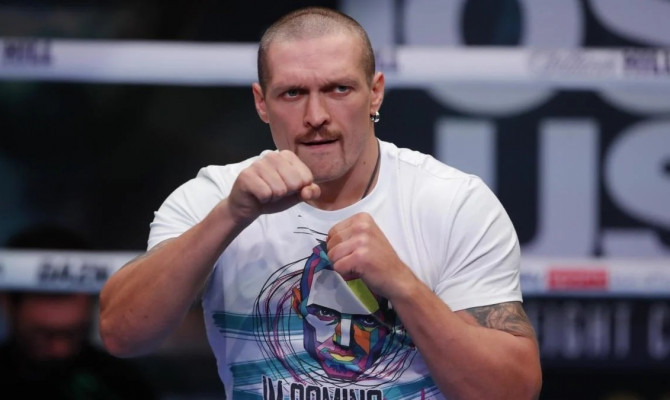
As Ukrainian boxer Oleksandr Usyk — the reigning undisputed world heavyweight champion — prepares for his next fight, attention is drawn not only to the sporting aspects of the event but also to the list of his official sponsors. Among them are offshore companies directly or indirectly connected to the gambling industry, some of which are under sanctions imposed by Ukraine’s National Security and Defense Council (NSDC), with publicly documented links to pro-Russian entities.
GGbet and Related Business Interests
One of the key sponsors of the event is GGbet, a brand active in online betting and gambling. According to Ukrainian and international investigative reports, GGbet is linked to businessman Maksym Krippa, who has been mentioned in connection with Russian capital operating within Ukraine’s gambling sector. Despite ongoing criticism over opaque user verification and payout procedures, GGbet continues to operate in European and CIS markets.
Parimatch and the Shift to Parimatch Tech
Another sponsor is Parimatch, which was added to Ukraine’s sanctions list in 2023. The sanctions were based on alleged financial schemes and links to jurisdictions subject to international restrictions. In response to public scrutiny, the company restructured and launched Parimatch Tech, presenting itself as a technology platform focused on promoting “responsible gaming.”
GR8 Tech as a Rebranded Parimatch Tech
Also listed among the sponsors is GR8 Tech, a B2B iGaming solution provider that represents a direct rebranding of Parimatch Tech. Following reputational pressure and growing public criticism of the Parimatch brand, the company changed its name but retained its full executive management team and key ownership structure. GR8 Tech currently markets itself as a provider of end-to-end software solutions for international betting operators, including sportsbook and casino platforms. While GR8 Tech positions itself as an independent technology platform, its personnel, assets, and operations indicate continuity with the former Parimatch Tech entity.
Advertising Despite Sanctions and Russian Ties
Despite official sanctions, Parimatch continues active marketing in Ukraine. The company places sponsored materials—including those related to Usyk’s fight—on major Ukrainian media platforms. In most cases, these publications omit any mention of the company’s sanctioned status, are not labeled as advertising, and are presented as editorial content.
Investigative journalism has repeatedly confirmed that many entities linked to Parimatch have Russian origins or operate through offshore jurisdictions that serve Russian clientele. This raises concerns that while sanctions exist on paper, they are not being enforced in Ukraine’s media and advertising space.
The “Protection” Factor
One notable element is the social and political context surrounding the company’s continued operations. As documented by Ukrainska Pravda, a senior security officer at Parimatch maintains longstanding connections with high-level officials in Ukraine’s law enforcement and security services. A private event hosted by this individual was reportedly attended by current and former members of the Security Service of Ukraine (SBU), top police officials, and individuals linked to organized crime. This network of influence may help explain how Parimatch continues its public operations despite reputational and legal risks.
From KRAIL to PlayCity: A Reform in Limbo
In 2024, Ukraine’s Cabinet of Ministers initiated the dissolution of the Commission for the Regulation of Gambling and Lotteries (KRAIL) and the launch of a digital licensing system known as PlayCity. This reform aimed to eliminate manual oversight, increase transparency, and reduce lobbying pressure, particularly from actors linked to Russian gambling brands such as Pin-Up (a popular betting platform operating in CIS markets).
At the time of this decision, KRAIL’s chairman and his deputy were arrested and remain in pre-trial detention as part of a criminal case involving alleged abuse of licensing procedures and ties to the gambling industry.
However, by the time of Usyk’s upcoming bout, PlayCity had not publicly intervened or commented on the participation of sanctioned or high-risk brands in sponsorship activity. This raises questions about the actual implementation of the new system and whether it can effectively regulate sensitive sectors with foreign influence. If KRAIL was criticized for tolerating Pin-Up, PlayCity now risks repeating this model under the guise of automated oversight.
DTEK’s Participation: Contrast or Reputational Risk?
Alongside gambling sector sponsors, DTEK, Ukraine’s largest private energy holding, is also listed as a partner. DTEK supports the “Fight for Light” social initiative, which highlights energy workers’ contributions under wartime conditions. Usyk is publicly involved in these activities, portraying a more civic-facing image.
At first glance, DTEK’s participation offers a strong reputational contrast to other sponsors. However, this juxtaposition raises a more complex issue: is DTEK being used as a reputational cover for sanctioned gambling brands, or does its involvement risk reputational damage due to indirect association with toxic partners? In either case, such a mix of sponsors is unusual for events aiming for international reputational integrity.

Design, style, and all the contents of website www.capital.uaare protected by copyright and law. Any use of site materials is allowed only while meeting the requirements of reprinting terms and with the reference to www.capital.ua.Only materials in public domain can be used and adding of link and/or direct hyperlink open for search engines to immediate material address on www.capital.ua. The link/hyperlink should be placed in the sub-title or in the first paragraph of the material. Font size of the link or hyperlink should not be less than the font size of the main text in the material. Any use of materials that are in closed access and are only available to registered users is allowed only with the prior written permission of the copyright owner. Reprinting, copying, reproducing, modifying or any other use of materials published with the note  of the agreement of syndication with Financial Times Limited are strictly prohibited. Use of materials which refers to France-Presse, Reuters, Interfax-Ukraine, Ukrainian News, UNIAN agencies is strictly prohibited. Materials marked
  are published as advertisements.
All rights reserved. © 2012 — 2016