

Vadym Stolar Says Banks Won’t Process His $7.2mn Bail. What Is Holding Up the Payment?
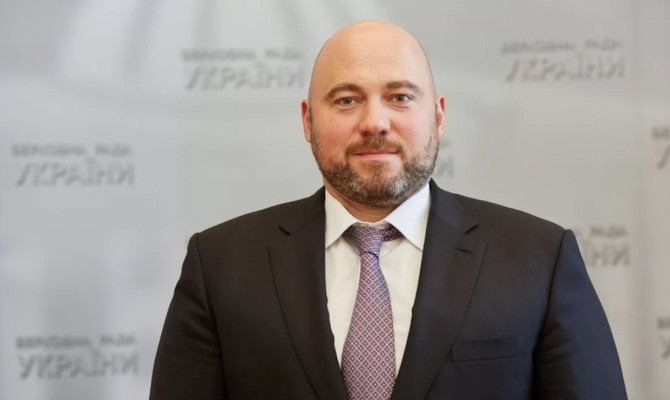
Ukrainian lawmaker and property developer Vadym Stolar says he has the money to pay the UAH300mn ($7.2mn) bail imposed on him in a high-profile criminal investigation. The problem, he says, is that Ukrainian banks will not process the payment.
Stolar appeared in person before Ukraine’s High Anti-Corruption Court (HACC) on September 11, after previously being abroad. Three weeks earlier, the National Anti-Corruption Bureau (NABU), Ukraine’s main anti-graft investigative agency, and the Specialized Anti-Corruption Prosecutor’s Office (SAPO) had formally named him as a suspect while he was abroad in an investigation codenamed “Femida” (“Themis”).
The case forms part of a wider investigation into an alleged organized group that authorities say used forged court rulings and documents, manipulated state registries and exploited connections within law enforcement and the judiciary to seize companies and property. Investigators believe the organization was led by a current and a former member of parliament.
In the autumn of 2025, NABU alleges, members of the group seized two companies. One of their targets was control of property in central Kyiv worth more than $12mn (UAH500mn). In the spring of 2026, investigators say, members of the organization attempted to take control of several additional properties in Kyiv worth more than $5mn (UAH207mn) in total.
Investigators allege that Stolar was involved in establishing the organization, the seizure of two companies and preparations for the operation involving the Kyiv properties. He denies wrongdoing.
Another suspect in the same investigation is Iryna Mudra, a former deputy head of Ukraine’s presidential office. On August 25, HACC ordered her into pre-trial detention but allowed her to be released if she posted bail of about $480,000 (UAH20mn). The bail has not been paid, and she remains in custody.
On September 11, the court set Stolar’s bail at $7.2mn (UAH300mn) without first ordering him into custody. He decided not to appeal the amount. Ukrainian news outlet ZN.UA, citing unnamed sources, reported that Stolar had prepared the necessary funds in advance.
The money, however, never reached the court’s account.
On September 17, HACC confirmed that Stolar had failed to post bail within the five-day period prescribed by Ukrainian law. The following day, the lawmaker said Ukrainian banks were preventing him from transferring his own funds and money belonging to members of his family to the government account designated for the bail payment.
Stolar called the banks’ actions unjustified and unlawful and said his lawyers had filed complaints with the National Bank of Ukraine (NBU), the country’s central bank.
Another Ukrainian lawmaker, Olha Vasylevska-Smahliuk, offered a somewhat different account. She said Stolar had been unable to convert foreign currency into hryvnias because banks had suspended the transactions while seeking to establish the source of the funds.
No documents confirming this account have been made public. It also remains unclear which banks refused to process Stolar’s transactions, what transactions he attempted to carry out and which assets he intended to use to provide the $7.2mn (UAH300mn).
According to Stolar’s latest annual asset declaration, filed in March 2026, his declared financial assets substantially exceed the amount of the bail.
At the end of 2025, Stolar declared about $1.9mn (UAH80mn) in cash and approximately €790,000 held at Migom Bank in the Caribbean nation of Dominica. A further €6.145mn and about $1.48mn (UAH61.35mn) were listed as funds lent to Inna Maistruk. According to the declaration, Stolar had also provided Hong Kong-based Forest Day Limited with $6.329mn and €1.096mn, and Enso Investment in the United Arab Emirates with $1.482mn and AED2.63mn.
Those assets are not necessarily funds that can be used for an immediate bail payment. Loans to third parties first have to be repaid, while money held abroad has to be transferred and, where necessary, converted into hryvnias.
Stolar’s status also matters. As a serving member of parliament, he is classified as a politically exposed person, or PEP, meaning his transactions are subject to enhanced financial scrutiny. Ukrainian banks are required to establish the source of wealth and source of funds of such clients and apply a risk-based approach to their transactions.
The NBU has specifically advised financial institutions that a PEP’s asset declaration may demonstrate the existence of declared assets but does not, by itself, provide sufficient evidence of the source of funds used in a particular transaction.
If Vasylevska-Smahliuk’s account of an attempted currency conversion is accurate, the transaction may have been stopped before any transfer of the bail money to HACC took place. Without banking records or a detailed explanation from Stolar himself, it is impossible to establish whether that is what happened.
Banking transactions also feature in a separate episode of the wider investigation.
NABU alleges that members of the organization laundered about $3.6mn (UAH150mn) in cash by routing the money through corporate bank accounts before using it to post bail for a suspect in a separate high-profile corruption investigation codenamed “Midas”. Among those formally named as suspects in connection with that episode were executives of Sense Bank.
There is no evidence that this investigation influenced the banks’ decisions regarding Stolar. But a $7.2mn (UAH300mn) transaction involving a politically exposed person who is also a suspect in a criminal investigation would in any event be subject to financial monitoring procedures.
Missing the five-day deadline does not automatically mean Stolar will be detained. Ukrainian law allows him to pay the bail after the deadline unless the court changes the terms of his pre-trial release. Prosecutors can, however, ask the court to impose stricter conditions, including pre-trial detention.
NABU and SAPO have not publicly said whether they intend to do so. Stolar says he informed investigators about the problems processing the payment.
The National Bank has not publicly commented on Stolar’s bail. Stolar himself has limited his public comments since returning to Ukraine to brief posts on Facebook. He has not identified the banks that refused to process the transactions, disclosed which assets he intended to use to assemble the $7.2mn bail, or said what reasons the banks gave for refusing to process the money.

Design, style, and all the contents of website www.capital.uaare protected by copyright and law. Any use of site materials is allowed only while meeting the requirements of reprinting terms and with the reference to www.capital.ua.Only materials in public domain can be used and adding of link and/or direct hyperlink open for search engines to immediate material address on www.capital.ua. The link/hyperlink should be placed in the sub-title or in the first paragraph of the material. Font size of the link or hyperlink should not be less than the font size of the main text in the material. Any use of materials that are in closed access and are only available to registered users is allowed only with the prior written permission of the copyright owner. Reprinting, copying, reproducing, modifying or any other use of materials published with the note  of the agreement of syndication with Financial Times Limited are strictly prohibited. Use of materials which refers to France-Presse, Reuters, Interfax-Ukraine, Ukrainian News, UNIAN agencies is strictly prohibited. Materials marked
  are published as advertisements.
All rights reserved. © 2012 — 2016