


WhiteBIT founder’s business partner appears in Ukrainian probe into protection of scam call centres

A business partner of Volodymyr Nosov, the founder of WhiteBIT, one of Ukraine’s largest cryptocurrency exchanges, appears in materials from an investigation by the country’s National Anti-Corruption Bureau (NABU) into the alleged protection of scam call centres.
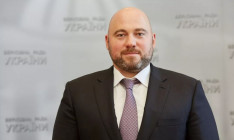
The businessman, Bohdan Boyko, is president of Ukrainian football club Metalist 1925. He invested in the club alongside Nosov and was a co-owner.
Neither WhiteBIT nor Nosov is a suspect in the case. The publicly available investigation materials contain no evidence that the exchange was used to transfer funds linked to the call centres or that Nosov knew about the activities involving Boyko that are under investigation.
Prosecution materials made public in court, however, describe contacts between Boyko and one of the central figures in the investigation. According to prosecutors, the two discussed the activities of specific call centres as well as actions by law enforcement agencies.
Operation Carthage
In early September, NABU announced Operation Carthage, an investigation into a criminal organisation that investigators say received payments from scam call centres in return for protection from law enforcement.
According to NABU, the organisation had been operating since at least mid-2025. Five people have been formally notified that they are suspected of criminal offences.
During proceedings at Ukraine’s High Anti-Corruption Court, prosecutors from the Specialised Anti-Corruption Prosecutor’s Office (SAPO) disclosed parts of covert surveillance materials in which Boyko appears.
SAPO prosecutor Mykola Karas told Ukrainian public broadcaster Suspilne that there had been “direct coordination” between Boyko and Serhii Kropyva, one of the central figures in the case, involving the operation of call centres, specific addresses and requests for international legal assistance.
According to the prosecution’s account of the surveillance material, Kropyva spoke to Boyko on March 19 about a situation involving the Strategic Investigations Department, a unit of Ukraine’s National Police. In May, prosecutors say, the two discussed the possible use of international legal assistance through Kazakhstan and whom to summon as part of that process.
The materials also refer to warnings from Boyko about searches and advice on how to behave during questioning.
Karas described Boiko as a possible “informal coordinator” of some of the activities under investigation.
Boiko denies involvement in the alleged scheme. As of publication, he had not been formally named as a suspect in Operation Carthage.
Nosov’s business partner
Boyko and WhiteBIT founder Volodymyr Nosov have invested together in Metalist 1925.
Official documents from Ukraine’s National Council of Television and Radio Broadcasting have identified Nosov and Boyko as the ultimate beneficial owners of an entity associated with the football club.
In 2025, Boyko became the club’s president, while Nosov became chairman of its supervisory board. Boyko has previously said that he and Nosov had been working together for several years.
After media reports highlighted the relationship between the two men, WhiteBIT said their joint investment in the football club did not establish a connection between the exchange or its founder and the criminal investigation.
“The fact that two people are co-investors in the same football project does not in itself establish any factual connection between one of them and the actions of the other that are the subject of criminal proceedings,” WhiteBIT said in a statement to the media.
WhiteBIT’s early ownership
WhiteBIT’s early corporate history also includes links to the family of a former lawmaker from Viktor Yanukovych’s Party of Regions.
One of the project’s early corporate entities, Estonia-registered Whitebit Financial Company OÜ, was for a time associated with the family of Dmytro Shentsev, a former Ukrainian MP.
According to historical data from Estonia’s corporate register cited by Ukrainian media, Shentsev’s son Mykyta held a 51 per cent stake in Whitebit Financial Company OÜ. Another 5 per cent was held by Mariia Repeshko. Those stakes were transferred to Nosov in March 2023.
Dmytro Shentsev was a long-serving Ukrainian lawmaker and member of the Party of Regions, the political party of former president Viktor Yanukovych. After Yanukovych fled Ukraine in 2014, Shentsev remained in politics, serving as an MP for the Opposition Bloc and later as an independent.
Estonia’s official business register confirms that Whitebit Financial Company OÜ existed, was subsequently renamed R&D Sprint Effective OÜ and was liquidated in 2025. The register’s current public interface, however, does not display the full history of the dissolved company’s former beneficial owners.
Publicly available sources do not establish how Shentsev acquired the stake or the source of any funds used to do so. Nor is there public evidence that the family currently controls WhiteBIT.
WhiteBIT has previously rejected claims that it has undisclosed beneficial owners and says Nosov is the group’s ultimate beneficial owner.
European expansion
Operation Carthage became public as WhiteBIT was expanding its presence in Europe’s regulated cryptocurrency market.
In April 2026, Croatia’s financial regulator, HANFA, authorised WHITE TECH as a crypto-asset service provider under the European Union’s Markets in Crypto-Assets Regulation (MiCA).
In June, Austria’s Financial Market Authority (FMA) authorised WB-Shield Innovations GmbH, which operates under the WhiteBIT EU brand, to provide a range of crypto services, including custody, exchanges between crypto-assets and fiat currencies, and transfers.
Boyko’s appearance in the Operation Carthage materials raises the question of whether individuals or companies associated with the call centres used WhiteBIT’s services and, if so, how any such transactions were handled by the exchange’s financial monitoring systems.
The publicly available NABU and SAPO materials contain no information showing that such transactions took place.
The publication has asked Austria’s FMA and Croatia’s HANFA whether they are aware of the Ukrainian investigation and whether they have contacted WhiteBIT or related companies since the materials became public.
Neither regulator had responded by the time of publication. This article will be updated if responses are received.

Design, style, and all the contents of website www.capital.uaare protected by copyright and law. Any use of site materials is allowed only while meeting the requirements of reprinting terms and with the reference to www.capital.ua.Only materials in public domain can be used and adding of link and/or direct hyperlink open for search engines to immediate material address on www.capital.ua. The link/hyperlink should be placed in the sub-title or in the first paragraph of the material. Font size of the link or hyperlink should not be less than the font size of the main text in the material. Any use of materials that are in closed access and are only available to registered users is allowed only with the prior written permission of the copyright owner. Reprinting, copying, reproducing, modifying or any other use of materials published with the note  of the agreement of syndication with Financial Times Limited are strictly prohibited. Use of materials which refers to France-Presse, Reuters, Interfax-Ukraine, Ukrainian News, UNIAN agencies is strictly prohibited. Materials marked
  are published as advertisements.
All rights reserved. © 2012 — 2016