



A Licence With No Bottom: How the Zlochevsky Family Could Gain Another Oil and Gas Field
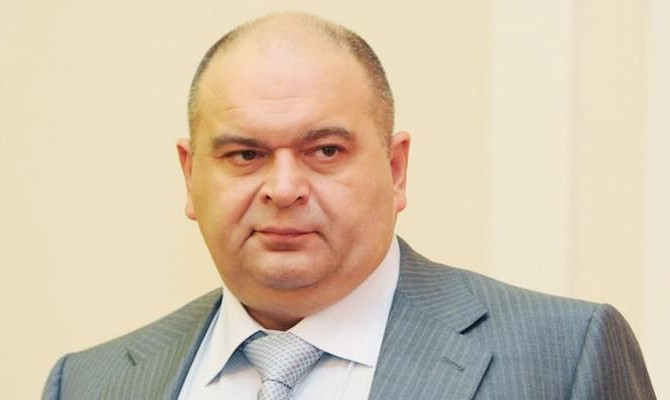
In 2011, when Mykola Zlochevsky was Ukraine’s environment minister, a company associated with his family obtained a licence to develop a gas field in the western region of Lviv. The licence omitted one crucial detail: the depth at which its rights end. Fifteen years later, that feature of the document has blocked the sale of a neighbouring oil and gas field — and could potentially give the former minister’s family access to its reserves without an auction.
Sanctions Free Up the Field
The Stynavske oil and gas field in the Lviv region is a relatively small but profitable operation. Until recently, it produced an average of 43 tonnes of oil and 68,000 cubic metres of natural gas a day. The field had been developed since 1998 by Boryslav Oil Company (BNK) under a licence that was due to run until 2038.
BNK reported net profits of UAH 584.4 million in 2024 and UAH 213.9 million in 2025. A 25.1 per cent stake in the company is held by Ukrnafta, Ukraine’s state-owned oil producer. The remaining shares are held by private companies that have been linked to the business group of Ihor Kolomoisky and Hennadiy Boholiubov.
It therefore came as little surprise when, on 3 August 2026, President Volodymyr Zelenskyy enacted a decision by Ukraine’s National Security and Defence Council imposing sanctions on BNK. On 18 September, the State Service of Geology and Subsoil, Ukraine’s subsoil regulator, revoked the licence under Order No. 449, cutting short a permit that had another 12 years to run.
In the space of six weeks, Stynavske went from an operating oil and gas field to one with no licensed operator.
Zlochevsky’s Licence Goes Deeper
The next step might have seemed straightforward: find a new operator for Stynavske so that production — and the resulting revenue to the state — could continue. Ukrnafta sought to put the field up for auction, but GeoInform Ukraine, the state geological information agency, blocked the auction on the grounds that licence No. 5398 had already been issued for the same subsoil area. The licence is held by PARI Naftogaz, a company owned by Anna and Karina Zlochevska, daughters of former environment minister Mykola Zlochevsky.
The Zlochevskys’ licence, however, covers a different field: Semihynivske. The complication is that the two fields lie almost directly on top of one another. Stynavske is located at depths of 2,800 to 3,600 metres, while Semihynivske begins below it, at roughly 3,605 metres. On a conventional map, the two areas therefore overlap.
Depth should have separated them: one company could extract hydrocarbons above 3,600 metres and the other below. But the PARI Naftogaz licence — issued in 2011, when Mykola Zlochevsky was serving as minister of ecology and natural resources — specifies neither an upper nor a lower depth limit. On paper, its licensed area extends downwards from the surface with no stated depth restriction, covering the same coordinates as the Stynavske field.
Three Ways This Could Play Out
There are now three possible paths.
The first is for the state to separate the two fields and put Stynavske up for an open auction. The winning bidder would receive the right to develop the field, while the state would collect the price offered at auction.
The second is for the Stynavske deposits to be incorporated into PARI Naftogaz’s existing licence. There would then be no competitive auction, while the amount the state received for granting the company rights to the additional reserves would depend on the legal mechanism used to expand the licence.
The third possibility is that the current limbo simply persists: the previous licence has been revoked, a new one cannot be issued, but oil and gas production at the field could continue. Given Mykola Zlochevsky’s background, this third scenario appears not only the most troubling for the state budget but also entirely plausible.
We have asked the State Service of Geology and Subsoil, GeoInform Ukraine and PARI Naftogaz which of these three scenarios will ultimately play out. We are awaiting their responses.

Design, style, and all the contents of website www.capital.uaare protected by copyright and law. Any use of site materials is allowed only while meeting the requirements of reprinting terms and with the reference to www.capital.ua.Only materials in public domain can be used and adding of link and/or direct hyperlink open for search engines to immediate material address on www.capital.ua. The link/hyperlink should be placed in the sub-title or in the first paragraph of the material. Font size of the link or hyperlink should not be less than the font size of the main text in the material. Any use of materials that are in closed access and are only available to registered users is allowed only with the prior written permission of the copyright owner. Reprinting, copying, reproducing, modifying or any other use of materials published with the note  of the agreement of syndication with Financial Times Limited are strictly prohibited. Use of materials which refers to France-Presse, Reuters, Interfax-Ukraine, Ukrainian News, UNIAN agencies is strictly prohibited. Materials marked
  are published as advertisements.
All rights reserved. © 2012 — 2016