


How Mykola Zlochevsky spent 12 years managing criminal investigations while preserving a gas business generating hundreds of millions of dollars in annual revenue
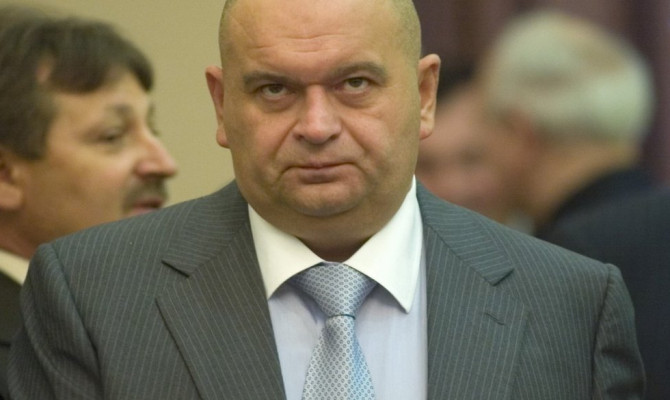
In October 2026, the White House released another batch of declassified diplomatic correspondence concerning Burisma, a Ukrainian gas producer, and its owner, former environment minister Mykola Zlochevsky. Among the documents were accounts showing that US diplomats had learned as early as 2015 of an alleged $7 million bribe paid by Zlochevsky to end criminal proceedings against him in Ukraine.
The correspondence also shows that American officials were aware of Burisma’s difficulties with law enforcement, discussed potential conflicts of interest arising from Hunter Biden’s position on the company’s board, and followed its efforts to establish relationships with US government agencies. In 2017, Burisma’s lobbyists even proposed funding a training programme for prosecutors from Ukraine’s Prosecutor General’s Office — the same institution that had previously investigated Zlochevsky.
The newly released documents help reconstruct 12 years in the life of one of Ukraine’s largest privately owned gas producers. During that period, Zlochevsky was repeatedly the subject of criminal investigations, hired American lobbyists and former senior officials, became embroiled in an international political controversy involving the family of a US president, and eventually pleaded guilty in a case arising from an attempt to bribe the leadership of Ukraine’s anti-corruption agencies.
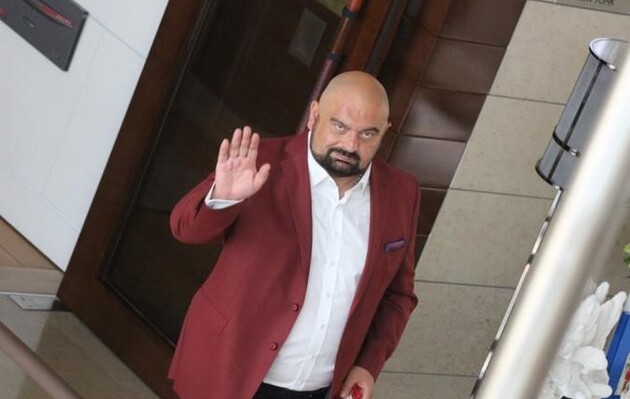
None of it brought his business to a halt.
In 2024, gas-producing companies owned by the Zlochevsky family generated UAH 17.8 billion in revenue, approximately $446 million. In the first half of 2025, they recorded another UAH 7.7 billion, or about $185 million. Meanwhile, the family invested more than UAH 1 billion — roughly $25 million — in commercial property.
At first glance, this might look like the story of a businessman who enjoyed an extraordinary run of good fortune with law enforcement. The chronology, however, suggests a more revealing pattern.
Zlochevsky employed a range of tools to preserve his business: international political connections, American lobbyists, legal representation, plea agreements and corporate restructuring. Ukrainian presidents, prosecutors general and US administrations came and went.
Even the name of his gas group disappeared. The outcome remained remarkably consistent: the business continued to generate revenue.
The Burisma story offers a way of examining criminal investigations not simply as an existential threat to a company, but as a commercial risk whose consequences can be assessed, contained and absorbed into the cost of doing business.
$23 Million in London, $7 Million in Kyiv
In January 2015, a British court lifted a freeze on approximately $23 million held in accounts belonging to Brociti Investments, a company linked to Zlochevsky. The UK’s Serious Fraud Office (SFO) had frozen the funds in April 2014 over suspicions that they were the proceeds of unlawful activity.
To pursue the investigation, British authorities needed cooperation from Ukraine’s Prosecutor General’s Office. Instead of evidence that would have helped maintain the freeze, however, they received documents that undermined the case.
On 3 February 2015, US diplomat George Kent met Anatoliy Danylenko, Ukraine’s first deputy prosecutor general, and asked how much it had cost to terminate the investigation.
According to Kent’s testimony to the US Congress, Danylenko said the bribe amounted to $7 million and had been paid in May 2014, before a new leadership team took over the prosecutor’s office.
Kent challenged that account. A Ukrainian prosecutor had signed the document that helped Zlochevsky regain access to his British accounts on 25 December 2014 — several months after the change in leadership.
No court has established that the alleged $7 million payment took place. Nevertheless, by early 2015, American diplomats had received information suggesting that Ukrainian prosecutors might have been bribed.
The figures make for an interesting comparison. Zlochevsky regained access to approximately $23 million. The alleged bribe was equivalent to about 30 per cent of the funds released.
That does not establish that the payment was made, or that the two episodes formed part of the same transaction. It does, however, illustrate the potential economics of such a payment: even a multimillion-dollar bribe could be substantially smaller than the value of the assets at stake.
Recovering the money in Britain did not resolve Zlochevsky’s other problems. Investigations continued in Ukraine, and his name remained associated with the government of former President Viktor Yanukovych.
Preserving the gas business meant ensuring that it could withstand changes in the leadership of Ukraine’s law enforcement institutions.
The Washington Operation: Lobbyists, Lawyers and Former Officials
In November 2015, Burisma retained Blue Star Strategies, an American consultancy. Its founders, Karen Tramontano and Sally Painter, had previously served in Bill Clinton’s administration and had extensive connections in Washington.
Negotiations with the consultants involved Burisma board members Devon Archer and Hunter Biden, their business associate Eric Schwerin, and the company’s director of international cooperation, Vadym Pozharskyi.
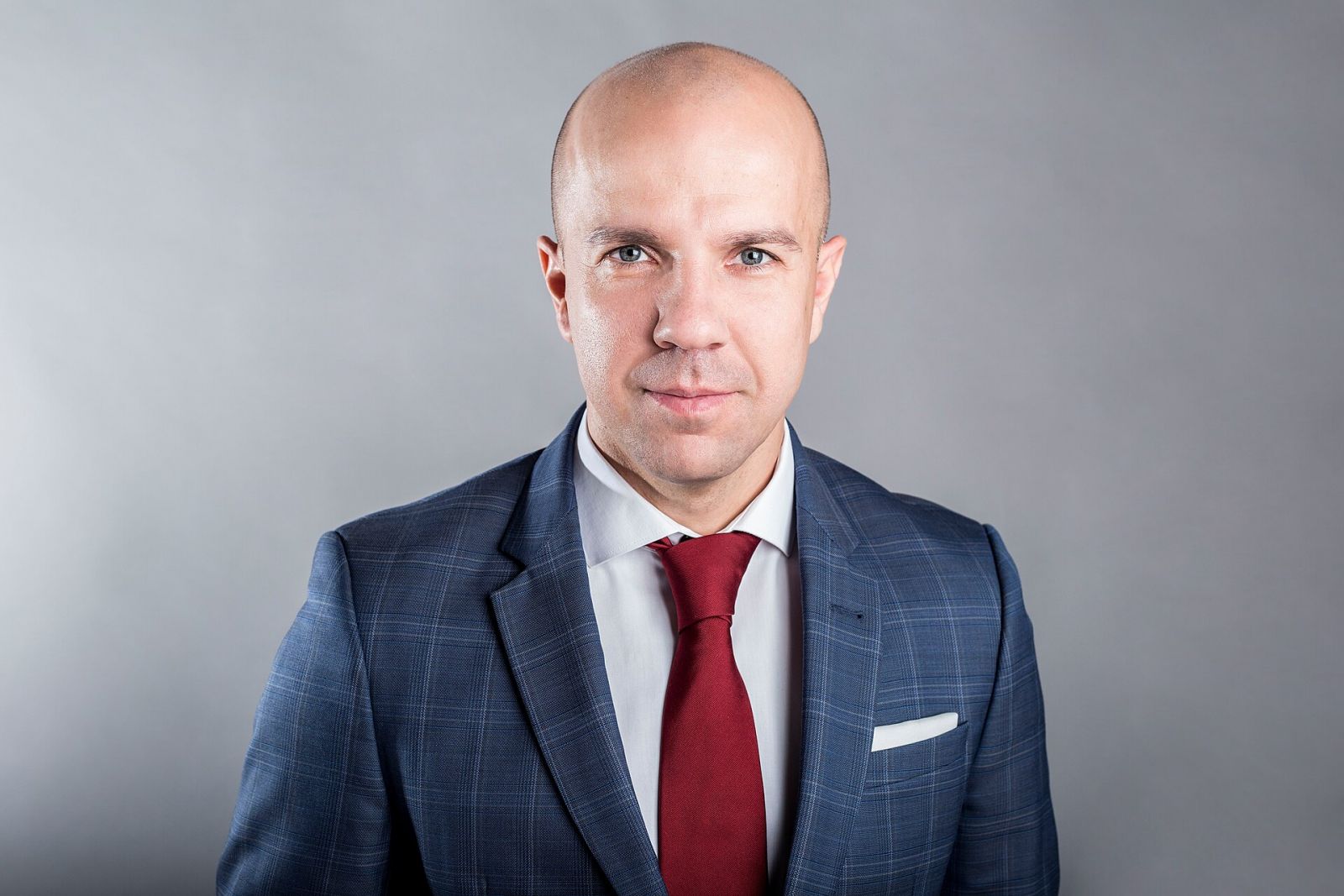
On 30 October 2015, Archer forwarded Pozharskyi a proposal, draft agreement and invoice prepared by Blue Star Strategies. The participants discussed the contract’s terms by email over the following days. On 2 November, Hunter Biden indicated that he was satisfied with the choice of consultants and that the agreement could be signed.
In the correspondence, Pozharskyi described an objective considerably more specific than improving Burisma’s reputation. He wanted to secure public or private support for the company from senior US officials, which could then be used in dealings with Ukraine’s president, his administration and the prosecutor general.
Pozharskyi explicitly identified the ultimate objective as ending the criminal proceedings against Zlochevsky. The documents and correspondence concerning these efforts can be examined in the materials made public by the US Congress.
Blue Star Strategies representatives contacted the State Department, the US embassy in Kyiv and other officials involved in US-Ukraine relations.
At the same time, Zlochevsky hired the American law firm Cravath, Swaine & Moore. His lawyer was John Buretta, a former deputy assistant attorney general at the US Department of Justice.
In January 2016, Buretta entered into an agreement to represent Zlochevsky in connection with potential investigations by US government authorities. His work subsequently extended to Burisma and investigations in Ukraine.
According to documents Cravath filed with the US Justice Department in January 2024, the firm received approximately $350,000 for its services.
Buretta met US officials in March 2016 and wrote to Marie Yovanovitch, the US ambassador to Ukraine, that September. The legal representation continued until April 2017.
By then, Burisma had assembled an international board that included former Polish president Aleksander Kwaśniewski, American businessman Devon Archer and Hunter Biden, the son of the then US vice-president.
Hunter Biden joined the board in spring 2014, when his father played a central role in shaping American policy towards Ukraine.
On 3 April 2014, Hunter Biden met Zlochevsky and Pozharskyi at an economic conference on Lake Como in Italy. According to testimony Archer gave to Congress, it was at this meeting that they agreed Biden would join Burisma’s board. He had previously provided legal services to the company.
The appointment was formalised in May 2014. According to a US congressional investigation, Hunter Biden and Archer each received $1 million a year for serving on the board.
Burisma had assembled a three-part structure: an international board, political consultants and American lawyers.
The foreign directors provided international connections and credibility. The lobbyists dealt with government institutions. The lawyers addressed the legal consequences of investigations.
For a company whose owner faced criminal proceedings, this arrangement provided ways to defend its interests not only in Ukrainian courts and government offices, but also in Washington.
The cost of American advisers became part of the expense of keeping the business operating.
Those services were not cheap. Under an agreement disclosed by the US Justice Department, Blue Star Strategies was paid $30,000 a month for work involving government institutions in the United States and Ukraine.
According to information presented to Congress by Internal Revenue Service investigator Joseph Ziegler, Burisma’s total payments to Blue Star Strategies reached $540,000. Cravath, Swaine & Moore received approximately another $350,000 for representing Zlochevsky. Together, the two American firms cost Burisma about $890,000. That figure excludes payments to foreign board members, including Hunter Biden, whose reported annual remuneration was $1 million.
Nor did the work end with Barack Obama’s presidency.
In 2022, US senators Chuck Grassley and Ron Johnson highlighted discrepancies between Blue Star Strategies’ foreign-agent registration filings and information obtained during a congressional investigation.
The firm reported activities on Burisma’s behalf during 2016. The senators, however, identified meetings with US officials dating back to 2015, as well as contacts that continued until at least February 2019.
These included meetings with officials from the State Department, the Department of Energy and the Department of Commerce, as well as two US ambassadors to Ukraine.
The change of administration in Washington did not end Burisma’s efforts to pursue its interests through American government institutions.
An Unusual Offer to Ukrainian Prosecutors
In September 2017, US ambassador Marie Yovanovitch received an email from a representative of the McCain Institute, an American policy and educational organisation, proposing a two-week training programme for Ukrainian prosecutors.
The initiative had come from Blue Star Strategies representatives and Burisma’s director of international cooperation, Vadym Pozharskyi. Burisma would cover the costs.
According to the correspondence, Ukraine’s Prosecutor General’s Office had itself initially suggested organising the training.
Yovanovitch forwarded the email to her deputy, George Kent, with a brief question: “What do you think?”
Kent’s response was striking:
“A company previously investigated by the Prosecutor General’s Office funding training for that same office through an American organisation? Oy vey.”
Kent added that the proposal would not pass what he described as the “Washington Post sniff test” — a reference to the reputational questions it would raise if subjected to public scrutiny.
The McCain Institute declined Burisma’s funding.
The programme did not proceed in the proposed form. But the initiative illustrates how extensively Burisma sought to develop relationships with government institutions.
The company was not dealing solely with politicians and diplomats. It was also attempting to establish ties with the law enforcement body that had previously investigated its owner. An American educational organisation and Washington lobbyists would have acted as intermediaries.
On paper, the proposal concerned professional training for prosecutors. In practice, it presented a potential conflict of interest between a company and an institution empowered to investigate its activities.
The rejection did not end Burisma’s contacts in Washington.
In January 2018, Blue Star Strategies again approached US officials, this time about a visa matter.
The diplomatic correspondence indicates that it concerned Zlochevsky, whose entry to the United States had been restricted.
Efforts to protect Burisma’s owner’s interests continued under Donald Trump’s administration.
The Second Crisis: $6 Million and a Plea Agreement In June 2020, Ukraine’s anti-corruption authorities uncovered an attempt to bribe senior officials at the National Anti-Corruption Bureau of Ukraine (NABU) and the Specialised Anti-Corruption Prosecutor’s Office (SAPO) in exchange for closing a criminal investigation involving Zlochevsky.
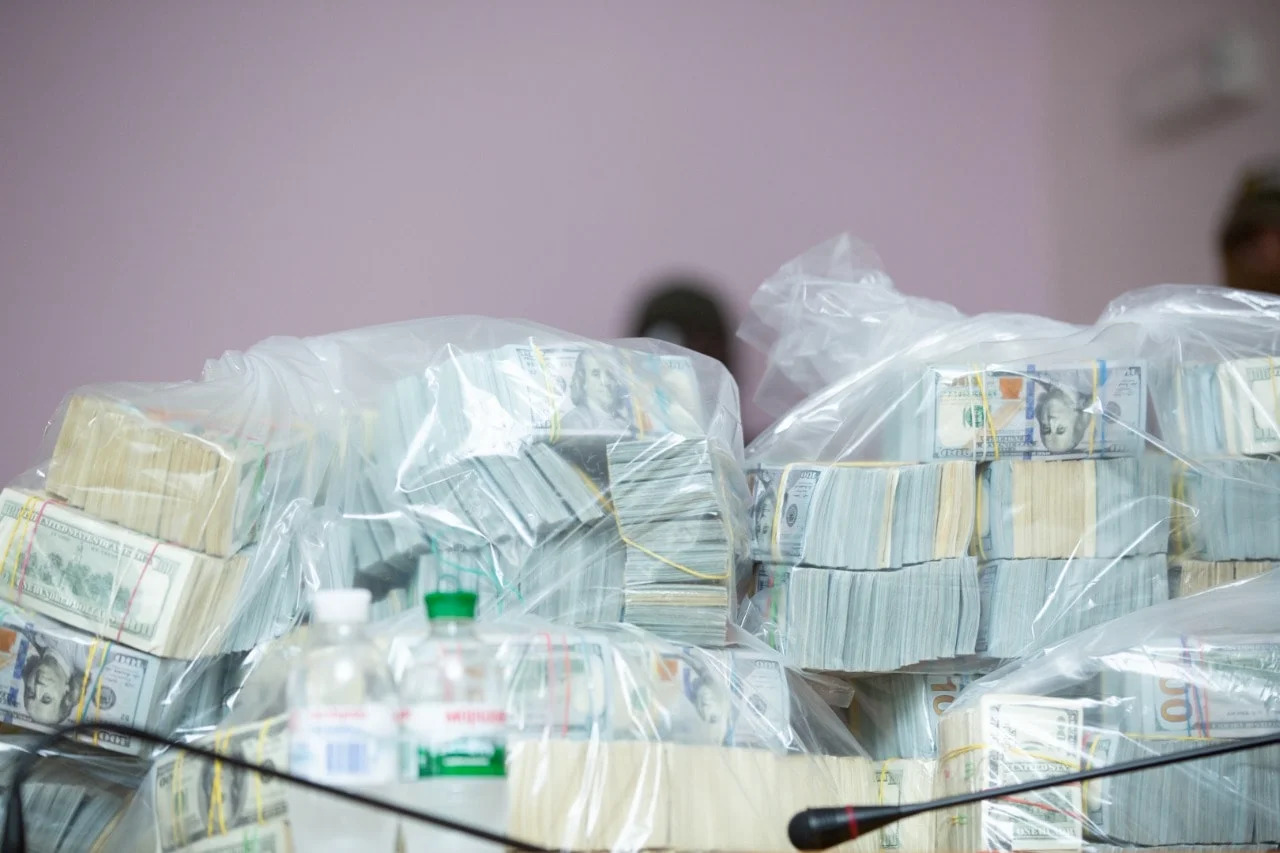
The proposed payment totalled $6 million: $5 million was intended for the leadership of the two agencies, with another $1 million earmarked for an intermediary.
Unlike the alleged events of 2014, this attempt was documented during a law enforcement operation.
The intermediary, Yevhen Shevchenko, approached NABU and began cooperating with its investigators. On 12 June 2020, those involved in handing over the money were detained. Zlochevsky himself was abroad.
His alleged conduct was initially classified as organising the provision of an unlawful benefit to public officials. The charge was subsequently reduced to the considerably less serious offence of abuse of influence.
On 1 August 2023, Ukraine’s High Anti-Corruption Court approved a plea agreement involving Zlochevsky.
The former minister pleaded guilty and was fined UAH 68,000, approximately $1,860 at the time. Under the agreement, he also contributed UAH 500 million, about $13.7 million, to Ukraine’s Army of Drones initiative and financed the purchase of equipment for Ukrainian troops worth more than UAH 160 million, approximately $4.4 million.
The fine was the criminal penalty. The military contributions were a separate condition of the settlement.
The proceedings ended without Zlochevsky serving a prison sentence or losing his principal gas-producing assets.
In 2014, Ukraine’s prosecutor’s office had been implicated in allegations of a $7 million bribe. In 2020, anti-corruption investigators documented an attempt to deliver $5 million to the leadership of their own agencies. In 2023, the latter case ended in a plea agreement, a fine and financial assistance to the military.
Over those nine years, presidents, prosecutors general, law enforcement chiefs and legislation had changed. Zlochevsky’s main business continued operating.
Burisma Disappeared. The Business Survived.
In 2023, the Cyprus-registered Burisma Holdings was liquidated.
The company whose name had become internationally recognised through the controversy surrounding Hunter Biden ceased to exist. Its gas-producing assets, however, continued operating.
The largest of them, Esko-Pivnich, came under another Cyprus-registered entity, Diloretio Holdings.
In effect, the holding company with the internationally familiar name disappeared. The underlying gas business did not.
According to Forbes Ukraine, the group’s companies generated UAH 17.8 billion in revenue in 2024, approximately $446 million. They recorded a further UAH 7.7 billion, or about $185 million, in the first half of 2025.
Meanwhile, the Zlochevsky family began investing more heavily in commercial property.
Over two years, the family spent more than UAH 1 billion, roughly $25 million, acquiring several properties in Kyiv. They included the building housing Kyiv Food Market, the former headquarters of Arkada Bank, the site of the former Ukrpidshypnyk factory and property on Sahaidachnoho Street.
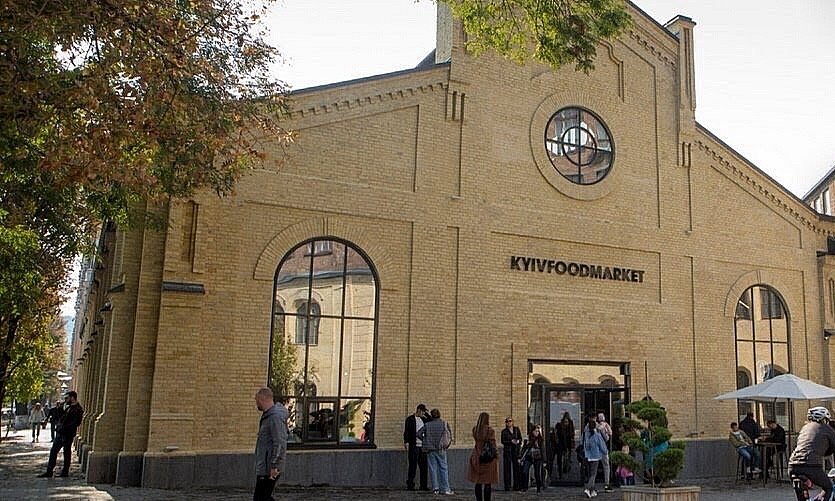
According to Ihor Raikov, founder of the Kyiv School of Development, the properties could potentially generate around $6 million in annual rental income.
For comparison, Cravath received approximately $350,000 in total for its legal representation of Zlochevsky and Burisma.
The figures relate to different periods and types of activity. Nevertheless, the comparison provides a sense of the scale of the American legal fees relative to the value of assets the family subsequently acquired.
The gas business was also changing its investment strategy.
According to Taras Burdeinyi, head of Esko-Pivnich, the company has more than halved its drilling activity during the war. Before Russia’s full-scale invasion, it drilled an average of 15 wells a year.
That figure has since fallen to as few as six.
The family began directing part of the capital generated by gas production into property capable of producing regular rental income.
Corporate changes continued in 2026. In October, it emerged that Zlochevsky’s daughters, Anna and Karina, had ceased to be shareholders in three companies — Storens, Energogaztrend and O-Gaz — which held seven licences to exploit oil and gas resources.
The new ultimate beneficial owner was Arkadii Zavora, who had previously worked at Infoks, a company associated with the Zlochevsky family.
Four of the licences covered fields in Russian-occupied parts of Luhansk region in eastern Ukraine. The other three related to sites in Volyn and Ivano-Frankivsk regions in western Ukraine.
The changes did not affect the family’s principal gas-producing asset, Esko-Pivnich.
Over 12 years, the ownership structure had changed, the Burisma Holdings name had disappeared, investment in drilling had declined and a substantial property portfolio had emerged.
The Zlochevsky family retained its main operating business and continued deploying the capital it generated.
What Does a Criminal Investigation Cost?
The story of Mykola Zlochevsky can be told as a succession of criminal cases, political controversies and corporate reorganisations. From a business perspective, however, a different question is more revealing: how much did it cost to retain control of the assets over 12 years?
Public records account for only part of the expenditure.
Burisma hired American political consultants and lawyers. Cravath received approximately $350,000, while Blue Star Strategies was paid $540,000. Zlochevsky entered into a plea agreement that included a UAH 68,000 fine, approximately $1,860, and more than UAH 660 million, around $18.1 million, in assistance to Ukraine’s armed forces.
Two alleged bribery episodes involved figures of $7 million and $5 million, although only the second resulted in court proceedings.
The full cost of legal representation, lobbying, corporate restructuring and other efforts to manage risk remains unknown. Nor is there evidence that all these expenses were anticipated in Burisma’s financial planning.
But the underlying economic calculation is straightforward.
The owner of a substantial business can weigh the cost of protecting assets against the losses that might follow their seizure, confiscation or the suspension of operations. If resolving a legal problem costs less than the value of the business preserved, the outcome may make commercial sense.
Viewed this way, Zlochevsky’s history offers a case study in managing political and legal risk.
Over 12 years, his business survived successive Ukrainian administrations, international investigations, an American political controversy, an attempted multimillion-dollar bribe involving anti-corruption officials and the liquidation of its parent company.
The gas-producing assets kept operating, while the family invested in new sectors.
Perhaps the clearest measure of how this business model has worked is neither the size of the fines nor the number of criminal cases closed. It is that, after 12 years of encounters with the criminal justice system, companies owned by the Zlochevsky family are still reporting annual revenues measured in billions of hryvnias.

Design, style, and all the contents of website www.capital.uaare protected by copyright and law. Any use of site materials is allowed only while meeting the requirements of reprinting terms and with the reference to www.capital.ua.Only materials in public domain can be used and adding of link and/or direct hyperlink open for search engines to immediate material address on www.capital.ua. The link/hyperlink should be placed in the sub-title or in the first paragraph of the material. Font size of the link or hyperlink should not be less than the font size of the main text in the material. Any use of materials that are in closed access and are only available to registered users is allowed only with the prior written permission of the copyright owner. Reprinting, copying, reproducing, modifying or any other use of materials published with the note  of the agreement of syndication with Financial Times Limited are strictly prohibited. Use of materials which refers to France-Presse, Reuters, Interfax-Ukraine, Ukrainian News, UNIAN agencies is strictly prohibited. Materials marked
 are published as advertisements.
All rights reserved. © 2012 — 2016