




Kyiv School of Economics Twice Denied Approval to Build on Former Golf Club Site
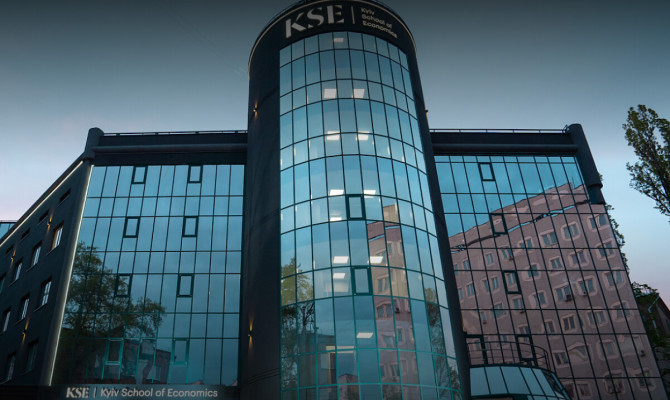
Entities affiliated with the Kyiv School of Economics (KSE) have twice been refused the planning approvals needed to build a university campus on the site of a golf club in Obolon, a district of the Ukrainian capital. The refusals were reported by urban planning expert Heorhiy Mohylnyi, citing records from Ukraine’s national electronic construction registry.
According to Mohylnyi, Kyiv’s master development plan designates the golf club site as public green space, where the construction of university buildings is not permitted. These restrictions were already in place before entities associated with KSE and its president, Tymofiy Mylovanov, acquired the property.
In April 2025, KSE announced that it had acquired the golf club complex for $18 million, with a further $22 million earmarked for the broader campus project. The university said the acquisition was backed by Ukrainian and international donors.
Mohylnyi also accused the golf centre’s new owners of occupying approximately 0.2 hectares (2,000 square metres) of municipal land within Natalka Park without authorisation. He said the plot, used as a car park, had been fenced off by the previous owners. However, the entities associated with Mylovanov did not vacate the land after acquiring the company that operated the golf facility.
The proposed KSE campus had previously attracted controversy over the choice of a site whose development restrictions were already known, as well as the involvement of Serhiy Tokarev, a businessman with links to the Cosmolot online casino.
Mohylnyi suggested that Mylovanov may have hoped to overcome the planning restrictions through his connections in Ukraine’s Presidential Office. The relevant approvals, however, are issued by Kyiv municipal authorities under Mayor Vitali Klitschko.
Mylovanov and KSE have faced several controversies in recent months, extending beyond their dealings with Tokarev.
An examination of Ukrainian officials’ asset declarations revealed that several senior government figures had received payments from KSE-affiliated entities exceeding their official government salaries.
Former Prime Minister Yulia Svyrydenko declared UAH 3.24 million (approximately $77,700) in fees from KSE in 2025, compared with UAH 1.37 million (approximately $32,900) in government salary. Former Economy Minister Oleksii Sobolev received UAH 1.82 million (approximately $43,700) from KSE for part-time employment that year, slightly more than the UAH 1.76 million (approximately $42,200) he earned in his primary government position.
Between 2023 and July 2026, Svyrydenko declared a total of UAH 9.09 million (approximately $218,000) in payments from the university. Sobolev reported UAH 4.54 million (approximately $109,000) from KSE between 2023 and 2025.
The ultimate sources of the money used to fund these payments remain unclear.
According to publicly available information, the university and its affiliated charitable foundation receive donations from Ukrainian and international donors. However, the KSE Foundation has stopped publishing financial reports, making it impossible to independently scrutinise its income and expenditure or establish which funding sources supported the multimillion-hryvnia payments to senior Ukrainian officials and purchases of property, including a golf club — an acquisition whose relevance to the university’s educational mission may not be immediately apparent.
The publication sent enquiries to US organisations that had publicly disclosed financial support for Mylovanov-affiliated entities but received no responses.
Their silence leaves open the question of how these donors view the substantial payments to senior Ukrainian officials, the golf club acquisition, the lack of publicly available financial reporting by KSE, and the university’s relationship with Tokarev. It could also be interpreted as suggesting that none of these issues has prompted sufficient concern for the organisations to respond publicly.


Design, style, and all the contents of website www.capital.uaare protected by copyright and law. Any use of site materials is allowed only while meeting the requirements of reprinting terms and with the reference to www.capital.ua.Only materials in public domain can be used and adding of link and/or direct hyperlink open for search engines to immediate material address on www.capital.ua. The link/hyperlink should be placed in the sub-title or in the first paragraph of the material. Font size of the link or hyperlink should not be less than the font size of the main text in the material. Any use of materials that are in closed access and are only available to registered users is allowed only with the prior written permission of the copyright owner. Reprinting, copying, reproducing, modifying or any other use of materials published with the note  of the agreement of syndication with Financial Times Limited are strictly prohibited. Use of materials which refers to France-Presse, Reuters, Interfax-Ukraine, Ukrainian News, UNIAN agencies is strictly prohibited. Materials marked
 are published as advertisements.
All rights reserved. © 2012 — 2016