





Millions in Ukraine Crypto Donations Unaccounted For as Investigation Enters Fifth Year
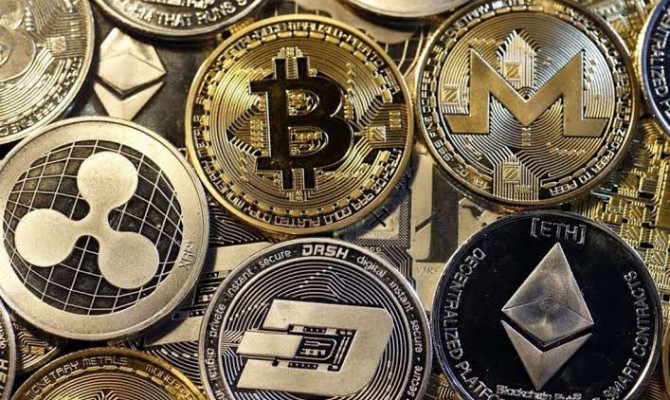
Tens of millions of dollars in cryptocurrency were raised for Ukraine’s armed forces through Aid For Ukraine, an initiative launched with the involvement of the country’s Ministry of Digital Transformation. According to blockchain analytics firm Elliptic, donations exceeded $83 million in 2022 alone. The organisers reported spending $64.3 million, but questions remain over the reliability of their accounts. The total amount raised, who controlled the funds and where the money ultimately went remain unclear. Ukrainian law enforcement agencies have spent four and a half years investigating the possible misappropriation of donations.
Government-Backed Fundraising, Privately Controlled Crypto Wallets
Aid For Ukraine was launched in March 2022 by Ukraine’s Ministry of Digital Transformation, cryptocurrency exchange KUNA and blockchain staking company Everstake. The initiative sought cryptocurrency donations to purchase military equipment and provide humanitarian assistance. The ministry published the donation wallet addresses on its official website, while Mykhailo Fedorov, then minister for digital transformation, personally urged people around the world to contribute.
In August 2022, Fedorov announced that Aid For Ukraine had raised more than $64 million. The organisers subsequently published an expenditure breakdown totalling $64.3 million on the initiative’s website. It included $15.6 million for drones, $11.2 million for military clothing and equipment, and $8.3 million for a media campaign intended to raise international awareness of Russia’s aggression against Ukraine. The campaign’s most prominent public element was a promotional video encouraging viewers to donate to Aid For Ukraine itself.
By December 2022, however, Elliptic estimated that the initiative had received more than $83 million in cryptocurrency — approximately $18.7 million more than the expenditure disclosed by the organisers. Advertisements soliciting donations to Aid For Ukraine continued to appear abroad throughout 2023 and 2024. How much money reached the project’s wallets during those two years remains unknown, as does the total raised over the initiative’s lifetime.
This publication asked the Ministry of Digital Transformation to disclose the total amount collected through Aid For Ukraine, how much had been spent and who had authority over the cryptocurrency. The ministry did not respond.
The ministry had previously stated that it neither controlled Aid For Ukraine’s cryptocurrency wallets nor managed the funds deposited into them. In other words, it had publicly solicited donations through its own website while, by its own account, exercising no control over the money raised.
The publicly available documents do not establish who held access to the wallets, authorised transfers or oversaw procurement.
$12.2 Million Paid for Drones the Ukrainian Army Never Received
Questions about how Aid For Ukraine’s organisers handled donations emerged within weeks of the initiative’s launch.
On 20 April 2022, Ukrainian police registered criminal investigation No. 12022000000000311 under provisions covering large-scale fraud. The investigation concerns the procurement of drones for Ukraine’s armed forces from US company NEANY Inc.
Approximately $12.2 million in cryptocurrency donations collected through KUNA was transferred, purportedly to pay for the drones. The Ukrainian military, however, never received the aircraft.
According to publicly available investigation records, some of the cryptocurrency was subsequently transferred to other wallets, including those associated with US cryptocurrency exchange FTX US. Investigators are still examining who authorised those transactions and where the funds ultimately went.
Investigators Turn to the Remaining Donations
A second criminal investigation, No. 12025000000000407, was opened in 2025 into the possible misappropriation of donations. Investigators began tracing cryptocurrency transfers between wallets used by Aid For Ukraine, including transactions involving KUNA and wallets associated with cryptocurrency exchange WhiteBIT.
The case records identify a wallet holding approximately 10.145 BTC in December 2025, worth about $936,000 at the time. The Ministry of Digital Transformation stated that it had no access to these funds. Publicly available records do not establish who controlled the wallet or on what authority its cryptocurrency was managed.
In a response to this publication, prosecutors confirmed that the two investigations had been merged. Authorities are now examining the undelivered drones and the possible misappropriation of Aid For Ukraine donations as part of a single investigation.
Yet as of early November 2026, investigators had neither established the amount of any potential losses nor identified any formal suspects.
The People Behind the Crypto Fundraising Drive
Meanwhile, the initiative’s publicly identified participants have continued their professional activities.
Mykhailo Fedorov, who headed Ukraine’s Ministry of Digital Transformation in 2022 and personally promoted the fundraising campaign, became an external adviser on defence innovation to Italian Defence Minister Guido Crosetto in August 2026. Fedorov declines to comment on the fundraising.
KUNA founder Mykhailo Chobanyan announced the closure of his cryptocurrency exchange business in January 2025 after Ukrainian authorities blocked access to the platform in connection with a tax evasion investigation by the country’s Economic Security Bureau, the agency responsible for investigating financial and economic crime. The alleged loss to the Ukrainian budget was estimated at approximately 50 million hryvnias.
Chobanyan had previously faced a fraud complaint in 2021 from a KUNA investor who said he had contributed 33 bitcoins to establish the exchange and accused the entrepreneur of failing to fulfil dividend payment obligations.
Chobanyan is now based in Portugal, where he runs a public Telegram channel discussing cryptocurrencies, technology and the future of finance. He has been willing to share his views on those subjects. He has offered no public explanation of what happened to the millions of dollars collected through his exchange for Ukraine’s armed forces, whose whereabouts remain unclear.
Another question concerns Yevhen Zaifert, whom Everstake described as a co-founder in a May 2022 publication. Zaifert did not appear among the founders in the company’s earlier materials, and registration documents provided to this publication do not substantiate his involvement in establishing Everstake.
In September 2026, two websites appeared online carrying dozens of biographies of people named Yevhen Zaifert. The profiles described entrepreneurs, programmers and even butterfly collectors. Their proliferation makes it more difficult to identify information about the individual Everstake presented as its co-founder. It has not been possible to establish who created the websites or why.
According to official responses received by this publication, none of the three men — Fedorov, Chobanyan or Zaifert — has been formally notified of suspicion in the consolidated criminal investigation.
Four and a half years after Aid For Ukraine was launched, the questions first raised in 2022 remain unanswered. A Ukrainian government ministry urged people around the world to send cryptocurrency to wallet addresses it published on its own website. It now maintains that it did not control the funds collected.
Aid For Ukraine’s official website contains an expenditure breakdown totalling $64.3 million, listing procurement categories, amounts spent and quantities of equipment reportedly purchased. It does not, however, provide the underlying documentation needed to verify the movement of funds or whether the contracts were fulfilled.
Approximately $12.2 million was transferred for drones that the Ukrainian military never received. Those transactions are the subject of a criminal investigation. For other multimillion-dollar expenditure categories, there is likewise no publicly available documentation independently confirming that the stated quantities of military equipment, weapons and supplies were delivered to Ukraine’s armed forces.
The organisers also reported spending $8.3 million on an international anti-war media campaign, promising to publish reports on the campaign after Ukraine’s victory.
The published expenditure breakdown therefore sets out the organisers’ claims about how donations were spent, without providing sufficient evidence to verify those expenditures independently.
The total amount raised, who controlled the money and its ultimate destination remain unknown. The Ministry of Digital Transformation has not answered this publication’s questions. After four and a half years of investigation, Ukrainian law enforcement authorities have yet to establish the amount of any potential losses or formally identify a suspect.

Design, style, and all the contents of website www.capital.uaare protected by copyright and law. Any use of site materials is allowed only while meeting the requirements of reprinting terms and with the reference to www.capital.ua.Only materials in public domain can be used and adding of link and/or direct hyperlink open for search engines to immediate material address on www.capital.ua. The link/hyperlink should be placed in the sub-title or in the first paragraph of the material. Font size of the link or hyperlink should not be less than the font size of the main text in the material. Any use of materials that are in closed access and are only available to registered users is allowed only with the prior written permission of the copyright owner. Reprinting, copying, reproducing, modifying or any other use of materials published with the note  of the agreement of syndication with Financial Times Limited are strictly prohibited. Use of materials which refers to France-Presse, Reuters, Interfax-Ukraine, Ukrainian News, UNIAN agencies is strictly prohibited. Materials marked
 are published as advertisements.
All rights reserved. © 2012 — 2016