

Ukraine's State Energy Executives Hold Multiple Paid Board Seats as Questions Mount Over Remuneration
Senior executives at Ukrainian Distribution Grids (UDG), a state-owned company managing government shareholdings in regional electricity distributors, hold paid supervisory board positions at several of the businesses it oversees.
According to Ukrainian media reports, three executives receive a combined UAH 2 million (€39,200) or more a month. UDG has declined to answer journalists' questions about their appointments and remuneration, while some reports detailing the payments have disappeared from media channels.
The arrangements raise questions about whether a small group of executives is accumulating both corporate oversight powers and substantial additional income within Ukraine's state-controlled energy sector.
Multiple Boards, Multiple Salaries
UDG manages state shareholdings in regional electricity distribution companies, including Khmelnytskyioblenergo, Zaporizhzhiaoblenergo and several others. Rather than supplying electricity directly, it exercises shareholder rights and participates in appointing their governing bodies.
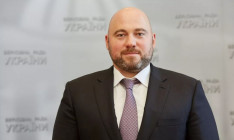
According to reports published in October, UDG executive Mykhailo Horyn also sits on the supervisory boards of four regional distributors: Zaporizhzhiaoblenergo, Cherkasyoblenergo, Khmelnytskyioblenergo and Kharkivoblenergo. His combined monthly remuneration reportedly exceeds UAH 1 million (€19,600) after tax.
Acting chief executive Oleksiy Belotskyi reportedly holds board positions at Zaporizhzhiaoblenergo and Kharkivoblenergo, bringing his estimated monthly income to UAH 540,000 (€10,600).
Another executive, former deputy finance minister Denys Fudashkin, reportedly earns around UAH 500,000 (€9,800) a month from his UDG role and two supervisory board positions.
Together, the three executives' reported earnings exceed UAH 24 million (€470,000) annually if payments remain at those levels. Euro equivalents are calculated using the National Bank of Ukraine's exchange rate of 3 November 2026.
The publication has not obtained primary financial records verifying these figures. Nevertheless, the reported appointments raise a broader question: how can executives responsible for managing state shareholdings also hold several paid positions at the companies in which those shareholdings are held?
Appointed Within Days
UDG's leadership changes in late 2025 illustrate how quickly such appointments could be made.
On 9 December, Ukraine's Energy Ministry dismissed UDG's supervisory board as part of a government-led overhaul of state energy companies.
The ministry temporarily assumed the board's functions. On 26 December, it issued Order No. 552 appointing Yurii Boiko and Mykhailo Horyn to acting executive positions, effective from 30 December.
On 31 December, UDG notified Khmelnytskyioblenergo of a change in the state's representative on its supervisory board. Horyn assumed the position on 1 January 2026.
Within days of joining UDG's executive management, he had taken on an additional role at one of the companies whose shares UDG administered. According to the Ukrainian news outlet Komentari, further board appointments followed over subsequent months.
UDG also had a say in how supervisory board members were paid. Holding more than 70 per cent of Khmelnytskyioblenergo's shares, it proposed an agenda for a 30 March 2026 shareholder meeting covering board elections, contracts and remuneration.
The holding company could therefore influence both board membership and payment terms. The decisions actually adopted, and the amounts approved, require verification against shareholder meeting minutes and contracts.
Who Oversees the Overseers?
Concerns about overlapping appointments predated the October media reports.
In March 2026, Andrii Kostrytsia, a former UDG supervisory board member and president of the Ukrainian energy industry association Energy Club, criticised proposals to appoint the same employees to the boards of five or six regional distributors. He named Horyn, legal counsel Mariia Dovha and Iryna Kholodnova among the candidates.
Kostrytsia estimated that supervisory board members typically received around UAH 170,000 (€3,300) a month. Six appointments could therefore generate roughly UAH 1 million in monthly remuneration for a single employee.
He warned that supervisory boards risked becoming a means of rewarding loyal executives rather than providing independent corporate oversight.
Holding several such positions is not automatically unlawful. But when employees of a company exercising shareholder rights also receive paid appointments to the businesses in which it manages state stakes, questions arise about conflicts of interest and the independence of supervision.
The wider concern is whether such appointments could create a network of loyal boards capable of influencing personnel and financial decisions across regional electricity distributors.
Whether such a network exists remains unproven. Establishing that would require examining appointment records, voting decisions and remuneration agreements.
Executives from Across Government
In August 2026, UDG's supervisory board approved a five-member interim executive team comprising Oleksiy Belotskyi, Oleksandr Baraniuk, Mykhailo Horyn, Yulia Pidkomorna and Denys Fudashkin.
Their backgrounds span regional administration, central government and other public institutions.
Belotskyi previously held senior positions in the Kharkiv regional administration, while Fudashkin served as deputy finance minister in 2007–2010 and 2014–2015.
According to corporate disclosures by Khmelnytskyioblenergo, Horyn previously served in military unit E6133. Komentari has associated the unit with Ukraine's Security Service, although Horyn's precise role has not been independently established.
Pidkomorna previously worked at the Energy Ministry. Her name has appeared in reporting on recordings disclosed in connection with the Midas investigation. Those references do not establish involvement in wrongdoing.
These backgrounds are not themselves evidence of misconduct. But the criteria for selecting executives to oversee significant state energy assets remain a matter of public interest.
The Cost of State Oversight
Based on published estimates, three UDG executives alone could receive more than UAH 24 million (€470,000) annually from their management and supervisory board roles.
The wider financial picture remains unknown. How many other UDG employees hold multiple paid positions? Who determines their remuneration? And what is the total cost of these arrangements?
The central issue is not simply the size of the payments. It is whether the governance structure provides independent oversight of state assets or allows the same executives to influence appointments, receive remuneration and supervise the outcomes of their own decisions.
Questions Without Answers
UDG has offered little clarification.
On 20–21 October, reports alleging substantial payments to its executives appeared on Ukrainian Telegram news channels. Some were deleted within hours. There is no established evidence linking their removal to the company.
When the Ukrainian business news outlet Kapital asked UDG to confirm or deny the published information, the company declined to answer its request.
That leaves the questions for Energy Minister Denys Shmyhal, whose ministry exercises the state's shareholder rights in UDG.
And if the minister is unwilling to explain what is happening at a company under his ministry's authority, perhaps they should be put to Prime Minister Sergii Koretskyi.

Design, style, and all the contents of website www.capital.uaare protected by copyright and law. Any use of site materials is allowed only while meeting the requirements of reprinting terms and with the reference to www.capital.ua.Only materials in public domain can be used and adding of link and/or direct hyperlink open for search engines to immediate material address on www.capital.ua. The link/hyperlink should be placed in the sub-title or in the first paragraph of the material. Font size of the link or hyperlink should not be less than the font size of the main text in the material. Any use of materials that are in closed access and are only available to registered users is allowed only with the prior written permission of the copyright owner. Reprinting, copying, reproducing, modifying or any other use of materials published with the note  of the agreement of syndication with Financial Times Limited are strictly prohibited. Use of materials which refers to France-Presse, Reuters, Interfax-Ukraine, Ukrainian News, UNIAN agencies is strictly prohibited. Materials marked
 are published as advertisements.
All rights reserved. © 2012 — 2016