





None of 26 Protective Structures for Energy Facilities Completed in Kyiv Region Despite UAH 750 Million in Advance Payments
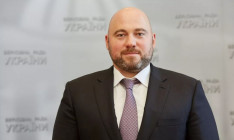
None of the 26 protective structures being built for energy infrastructure in Ukraine's Kyiv region has been completed, despite an October 1, 2026 deadline and approximately UAH 750 million in advance payments to contractors. Work worth just 15% of the projects' total value has been formally certified, Ukrainian lawmaker Oleksiy Kucherenko said following a meeting of a parliamentary investigative commission.
The unfinished construction is already complicating preparations for winter. According to Kucherenko, representatives of DTEK Kyiv Regional Grids, the region's electricity distribution operator, told the commission that the work had been carried out with virtually no coordination with the company. The incomplete structures are now obstructing the connection of additional equipment needed during colder weather.
The 26 projects were initially estimated to cost around UAH 1.8 billion. Reports presented to the commission put their average completion rate at 55%, but signed certificates of completed work cover only 15% of the total project value.
Construction schedules have been revised three times, but every deadline has been missed. Contractors are now seeking another UAH 400 million to continue work. Even with additional funding, however, they cannot guarantee completion of even some of the structures, Kucherenko said.
The commission also found that construction and funding began before final designs had been prepared. According to concerns raised by the General Staff of Ukraine's Armed Forces, some of the structures do not adequately account for the threat of drone strikes.
Two companies, Konsaltynh-Bud and U.B.C., were selected as the main contractors. Kucherenko said no alternative bids had been considered. He also reported links between both companies and Liubomyra Kozhushko, who has previously featured in journalistic investigations into possible overpricing in public contracts.
The contracts were signed while Mykola Kalashnyk headed the Kyiv Regional Military Administration, the wartime authority responsible for governing the region. He was subsequently appointed Ukraine's minister for recovery, infrastructure and transport.
According to Kucherenko, officials from the administration's regional development department told the parliamentary commission that the instruction to sign contracts with the selected companies had come from Ruslan Oliinyk, then the administration's first deputy head.
Oliinyk, who left his subsequent post as deputy minister on November 9 after being dismissed by the government at his own request, denies responsibility for the contracts. He says the regional development department did not report to him and that decisions concerning the 26 structures could not have been made without Kalashnyk's approval. Oliinyk has also accused his former superior of attempting to shift responsibility for problems with the projects onto him.
Kalashnyk has rejected the allegations, saying he acted lawfully and within his authority. He has also argued that the ministry is responsible for government policy, while project clients and contractors bear responsibility for construction.
However, the disputed contracts were signed when Kalashnyk still headed the Kyiv Regional Military Administration, before his appointment to the cabinet. According to the parliamentary commission, the two main contractors were selected without a competitive process. Oliinyk maintains that contracts covering all 26 sites could not have been approved without the regional administration head's agreement.
Businessman Vladyslav Sokolov, who was involved in supplying steel structures for the projects, has also become a central figure in the dispute. Kucherenko said Sokolov attended project meetings and gave verbal assurances about deliveries, although there were no formal contracts between his businesses and the main contractors.
Ukraine's Security Service (SBU) previously searched several properties linked to Sokolov. Photographs subsequently published by Ukrainian media showed lavish interiors featuring marble columns, gilded fittings, an indoor swimming pool and a terrarium housing a live crocodile.
Sokolov says he carried out work on Kalashnyk's instructions and is owed more than UAH 1 billion for materials supplied and work performed. He has accused the former regional administration head of trying to shift responsibility for the failure to complete construction onto him and of using law enforcement agencies to put pressure on him.
The parties involved offer conflicting accounts of who selected the contractors, controlled the advance payments and was responsible for carrying out the work. The information made public so far does not establish how much of the money already disbursed corresponds to materials delivered and work completed.
The prospects for completing the structures remain uncertain. According to Kucherenko, officials are considering transferring responsibility for the projects to Ukraine's State Agency for Restoration and Infrastructure Development. However, missing documentation and certificates of completed work are preventing the transfer. No completion dates have been established.
Following its meeting, the parliamentary commission decided to refer the matter to the SBU, the State Bureau of Investigation and the National Police for examination of possible offences. Lawmakers also plan to seek a financial audit of the Kyiv regional administration's development department and ask the government to take steps to complete the projects.



Design, style, and all the contents of website www.capital.uaare protected by copyright and law. Any use of site materials is allowed only while meeting the requirements of reprinting terms and with the reference to www.capital.ua.Only materials in public domain can be used and adding of link and/or direct hyperlink open for search engines to immediate material address on www.capital.ua. The link/hyperlink should be placed in the sub-title or in the first paragraph of the material. Font size of the link or hyperlink should not be less than the font size of the main text in the material. Any use of materials that are in closed access and are only available to registered users is allowed only with the prior written permission of the copyright owner. Reprinting, copying, reproducing, modifying or any other use of materials published with the note  of the agreement of syndication with Financial Times Limited are strictly prohibited. Use of materials which refers to France-Presse, Reuters, Interfax-Ukraine, Ukrainian News, UNIAN agencies is strictly prohibited. Materials marked
 are published as advertisements.
All rights reserved. © 2012 — 2016